Topical herbal medicine for psoriasis
Written by Norelle Hentschel, a degree qualified Naturopath with over a decade of clinical experience.
** Information provided in this article is general in nature and does not replace personalised medical advice; outcomes vary between individuals.
Are you looking for a steroid-free option for the topical treatment of psoriasis lesions?
Psoriasis is a persistent, chronic inflammatory skin condition which is strongly influenced by the immune system and presents with plaque lesions on the skin. These lesions can be itchy, painful, feel tight and bleed. Although Naturopathy places considerable emphasis on internal drivers (immunity, inflammation, digestive health and nutritional status), there is a significant role for topical herbs in psoriasis treatment.
The issue with topical medical treatments for psoriasis
Topical glucocorticoids or steroid creams of different potencies, such as hydrocortisone and betamethasone, are often prescribed to manage psoriasis as a stand-alone or in combination with Vitamin D analogues such as calcipotriol. Common side effects of calcipotriol include skin irritation and phototoxicity. In contrast, steroid creams are associated with skin thinning, disease rebound upon discontinuation, and concerns regarding systemic effects on the adrenal glands and blood sugar regulation. However, there is no consensus among studies on the systemic impacts (1). If you’re looking for alternatives to steroid creams, you are not alone. Studies have reported that up to 76.4% of patients who use topical corticosteroids would prefer a non-steroid option (2).
Can topical herbal creams help psoriasis?
Herbal medicine has a long pedigree of topical use in skin conditions. Plants have many phytochemicals which can target multiple parts of a disease process.
When it comes to finding an alternative to conventional topical treatments, it’s not just about herbs being ‘natural’. People with psoriasis, like you, are looking for a treatment that’s effective and has minimal side effects. Let’s delve into four herbs that have scientific evidence and clinical results in supporting healthy skin in psoriasis patients.
Best topical herbs for psoriasis
Oregon grape root
(Mahonia aquifolium or Berberis aquifolium)
This berberine-containing herb has been traditionally used for various skin complaints, and multiple clinical trials have also demonstrated clinically significant benefits in treating mild to moderate psoriasis.
Efficacy
- Multiple studies show that 10% Mahonia aquifolium cream reduces Psoriasis Area Severity Index (PASI) scores by 50-75% over 12 weeks.
- 81% of patients achieved complete clearance or significant symptom reduction
- Comparable efficacy to calcipotriol (Dovonex®), with 63% patients rating it equal/better than standard treatment.
What dose?
- A 10% concentration in a cream base, applied topically 2-3 times a day.
How long
- Improvements observed from week 4 with progressive benefits up to 12 weeks
How does it work?
Three primary therapeutic pathways:
- Antiproliferative: Inhibits abnormal keratinocyte growth via berberine alkaloids
- Anti-inflammatory: Suppresses lipoxygenase and lipid hydroperoxide activity
- Antimicrobial: Contains berberine/oxycanthin with antifungal properties
Safety Profile
- Tolerability:
- In trials, 82-85% patients report good/excellent tolerance
- Less than 5% experience transient itching/burning
- Contraindications: No significant restrictions, though caution is advised in pregnancy
My clinical experience
I make my own topical psoriasis creams, and I find a 10% Mahonia aquifolium to give consistently good clinical results in my psoriasis patients.
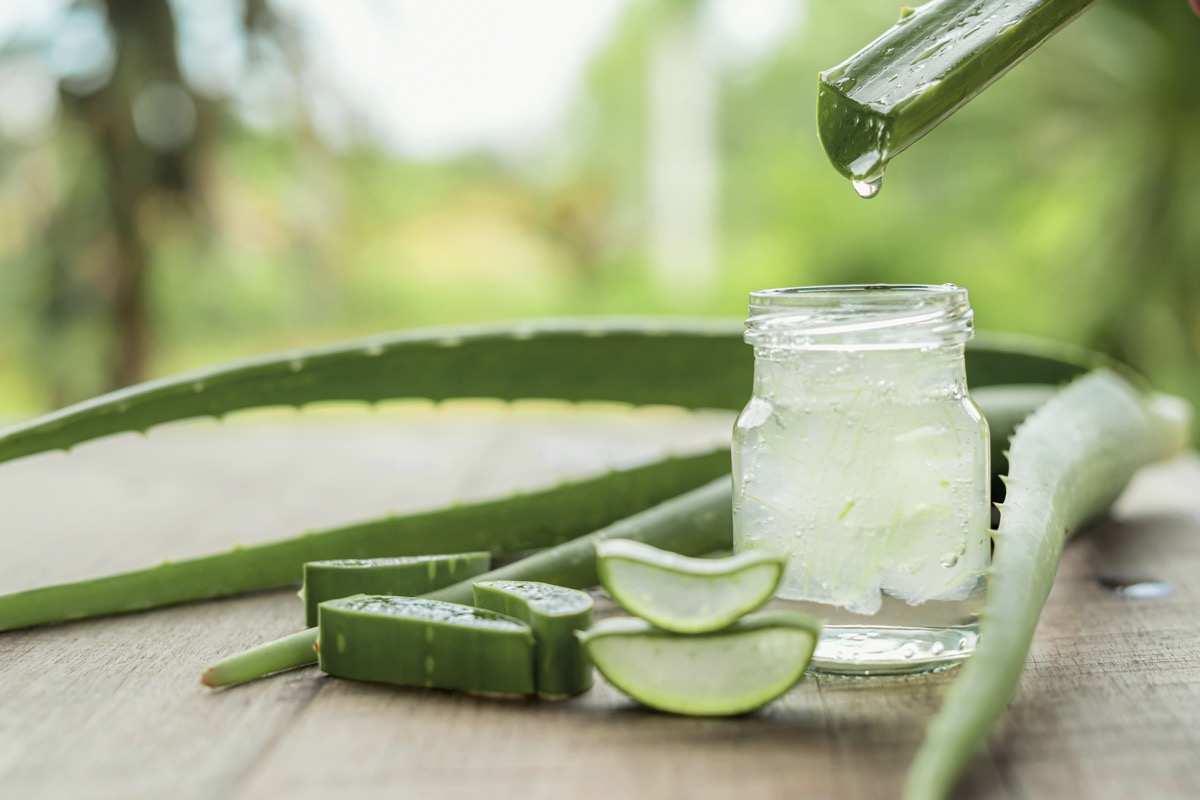
Aloe vera
(Aloe barbadensis)
Like Oregon Grape root, Aloe vera has a long traditional history of the gel being used to soothe skin complaints.
Efficacy
- Patients with mild to moderate plaque psoriasis showed an 82.8% clearance rate versus 7.7% for placebo.
- PASI improved from a mean of 9.3 to 2.2 (76% improvement)(3)
- Decrease in desquamation and number of proliferative cells in a mouse model of psoriasis(4)
What dose?
- A 0.5% concentration in a gel/cream base applied to lesions 2-3 times per day
How does it work?
- Anti-inflammatory – the polysaccharides in Aloe vera inhibit prostaglandin E2, which causes skin inflammation, redness, itching and swelling
- Immune modulating – reduces overactive immune responses by inhibiting tumour necrosis factor alpha, which reduces the abnormal growth of skin cells(5)
- Skin barrier repairs – the glucomannan in ole vera helps stimulate healing of the cracks that are often a feature of psoriasis (6)
Safety and Tolerability
- Aloe vera is generally well-tolerated.
- Most common side effects are local irritation, redness and itching, which resolved on discontinuation.
My clinical experience
I don’t use aloe vera as a stand-alone treatment, but it is a part of the natural base cream I use.
Coleus
(Coleus forskohlii)
This herb has been used in traditional Asian systems of medicine for skin ailments, but scientific research is limited to animal studies of psoriasis.
Efficacy
- An emugel with 10% Coleus significantly decreased skin thickness and redness in imiquimod-induced psoriasis (rats)(7).
How does it work
- Improve antioxidant balance in the skin by increasing glutathione and superoxide dismutase and decreasing malondialdehyde and nitric oxide levels.
My clinical experience
Despite the lack of scientific evidence, I have found this herb to be a helpful addition to psoriasis creams, and because of its unique action, it has synergy with other herbs.
Indigo naturalis
(Polyonum tinctorium)
Traditional Indigo naturalis was used as both a dye and medicine for wound healing, digestive complaints and blood disorders. It has had multiple clinical trials for topical use in psoriasis.
Efficacy
- Reduces scaling and redness of psoriasis lesions
- 56% of the Indigo group achieved a 75% improvement in PASI at 8 weeks compared to none in the placebo group(8)
- Results seen in 4-8 weeks
How does it work
- The compounds indigo, indirubin and tryptanthrin exert anti-inflammatory, antiproliferative and antiangiogenic effects.
- Tryptanthrin inhibits interleutikin-17 a key immune cytokine involved in psoriasis(9)
Safety and tolerability
- Generally, well-tolerated topically with minor skin irritation effects
- Indigo powder can stain the skin and clothes, but newer commercial delivery options, such as nanofibrous patches, minimise these issues (10).
My clinical experience
I have limited clinical experience with this, as using the powder in creams stains skin and clothes, so it is not practical. The nanofibrous patches are a practical solution to this, but at the time of writing, they are not available in Australia.
Tips for maximising results with topical herbal treatment
- Seek the professional advice of a qualified herbalist/naturopath to get the right combination for you
- Make sure the herbs are used in therapeutic amounts
- Apply consistently 2-3 times a day
- Expect to see results in 4-8 weeks
- Combining topical and other systemic treatments will get the best results for psoriasis remission.
Other herbs for topical treatment of psoriasis
Oregon grape root, aloe vera, Coleus, and Indigo naturalis are among the most researched/clinically effective herbs for treating psoriasis. When creating custom herbal creams for my patients, I may also incorporate other supportive herbs, such as chickweed, marshmallow, calendula, Baical skullcap, or Gotu kola, depending on the specific presentation.
When to Seek Medical Advice
While topical herbal treatments can support the management of mild to moderate plaque psoriasis, medical assessment is important if:
-
Your psoriasis is rapidly worsening or spreading
-
You develop signs of infection (increased pain, swelling, pus, fever)
-
You experience joint pain, stiffness or swelling (possible psoriatic arthritis)
-
Your psoriasis significantly impacts your mental health or quality of life
-
You are unsure whether the diagnosis is psoriasis
Severe, pustular, erythrodermic or extensive psoriasis requires medical supervision. Always consult your GP or dermatologist before stopping prescribed medications. If you are working with a psoriasis naturopath in Brisbane, collaborative care with your primary healthcare provider is recommended for the safest outcomes.
Further reading and resources
Healing the gut to treat psoriasis – the skin gut connection
Naturopathic treatment approaches for psoriasis
References
- Gisondi P, Gracia-Cazaña T, Kurzen H, Galván J. Calcipotriol/Betamethasone Dipropionate for the Treatment of Psoriasis: Mechanism of Action and Evidence of Efficacy and Safety versus Topical Corticosteroids. J Clin Med. 2024 Jan;13(15):4484.
- Burshtein J, Chovatiya R, Golant A, Zakria D, Shah M, Lio P, et al. Risks of topical corticosteroid therapy and role for advanced targeted topical treatments for inflammatory skin diseases: an expert consensus panel. Dermatol Online J [Internet]. 2025 [cited 2025 July 31];31(1). Available from: https://escholarship.org/uc/item/65m72953
- Farahnik B, Sharma D, Alban J, Sivamani RK. Topical Botanical Agents for the Treatment of Psoriasis: A Systematic Review. Am J Clin Dermatol. 2017 Aug 1;18(4):451–68.
- Pandey A, Srivastava N, Dubey RC, Dhaneshwar S, Shukla AK. Anti-psoriatic evaluation of aloe emodin-loaded topical hydrogel in an imiquimod-induced human plaque-type psoriasis in BALB/c mice. J Appl Pharm Sci. 2024 Sept 5;14,(9):279–91.
- Leng H, Pu L, Xu L, Shi X, Ji J, Chen K. Effects of aloe polysaccharide, a polysaccharide extracted from Aloe vera, on TNF‑α‑induced HaCaT cell proliferation and the underlying mechanism in psoriasis. Mol Med Rep. 2018 Sept 1;18(3):3537–43.
- Jales STL, Barbosa R de M, de Albuquerque AC, Duarte LHV, da Silva GR, Meirelles LMA, et al. Development and Characterization of Aloe vera Mucilaginous-Based Hydrogels for Psoriasis Treatment. J Compos Sci. 2022 Aug;6(8):231.
- Majhi S, Chauhan I, Kumar D, Alam MN, Hussain MS, Iqbal M. Coleus forskohlii shows anti-psoriatic activity in imiquimod-induced psoriasis rats. Asian Pac J Trop Biomed. 2024 Sept;14(9):382.
- Lin YK, Chang CJ, Chang YC, Wong WR, Chang SC, Pang JHS. Clinical Assessment of Patients With Recalcitrant Psoriasis in a Randomized, Observer-Blind, Vehicle-Controlled Trial Using Indigo Naturalis. Arch Dermatol. 2008 Nov 1;144(11):1457–64.
- Cheng HM, Wu YC, Wang Q, Song M, Wu J, Chen D, et al. Clinical efficacy and IL-17 targeting mechanism of Indigo naturalis as a topical agent in moderate psoriasis. BMC Complement Altern Med. 2017 Sept 2;17:439.
- Wang P, Gao J, Guo S, Liu H, Cao C, Hong S, et al. Benefits of topical indigo naturalis nanofibrous patch on psoriatic skin: A transdermal strategy for botanicals. Mater Today Bio. 2023 Aug 2;22:100756.
Need help with your skin health?
Norelle Hentschel is a degree qualified Naturopath with a clinic in Stones Corner, Brisbane and Telehealth consults Australia-wide. She has been in clinical practice since 2015 and has extensive experience in supporting psoriasis.
Want more articles like this?
Join us at Your Skin Remedy – the monthly missive for healthy skin from the inside out. Practical, actionable, and informative. Your clear, glowing skin starts here.
PS. Your inbox real estate is precious. Your Skin Remedy is pitch and promo free. I promise. One email a month — that’s it.
Frequently asked questions about topical herbal psoriasis treatments
How soon can I expect to see results from topical herbal treatments for psoriasis?
Most clinical studies on herbs such as Mahonia aquifolium (Oregon grape) and indigo naturalis show improvements within 4–8 weeks of consistent use. Some people notice reduced redness, scaling, or itch sooner, but psoriasis is a chronic inflammatory condition, and meaningful improvement typically requires daily application over several weeks.
Consistency is key. If you’re not seeing improvement after 8 weeks, it’s worth reviewing the diagnosis, concentration used, and whether internal or lifestyle factors also need addressing.
Are topical herbal remedies safe to use alongside conventional psoriasis treatments?
In many cases, yes, but this should be done under professional guidance.
Certain herbal creams can be used alongside topical corticosteroids or Vitamin D analogues, particularly when transitioning off steroids or during maintenance phases. However, timing, formulation strength, and skin sensitivity all matter. Combining treatments without guidance may increase irritation or mask symptoms.
If you’re currently under the care of a GP or dermatologist, it’s best to discuss any new topical treatments with them before starting.
Can herbal creams prevent psoriasis flare-ups, or do they only treat symptoms?
Topical herbs primarily help manage local skin symptoms such as scaling, redness, and plaque thickness. Some, like indigo naturalis may help reduce inflammatory activity in the skin.
However, psoriasis is a systemic inflammatory condition influenced by immune function, gut health, stress, and genetics. For people experiencing frequent flare-ups, a broader treatment plan that addresses internal triggers may provide more sustainable results.
Topicals can be very helpful but they are often most effective when part of a comprehensive plan.
Are there any side effects from topical herbal treatments?
Most herbal creams are well tolerated, but possible side effects can include
-
Mild skin irritation or redness
-
Temporary staining of skin or clothing (particularly with indigo naturalis)
-
Allergic reactions in sensitive individuals
It’s always wise to perform a small patch test before applying a new product more broadly. If you experience worsening irritation, swelling, or signs of infection, discontinue use and seek medical advice
Do these herbal treatments work for all types of psoriasis?
Most research on topical herbs has focused on plaque psoriasis, which is the most common form.
Other types such as guttate, inverse, pustular, or scalp psoriasis may require different approaches or medical supervision. Location also matters; for example, facial or genital psoriasis requires particularly gentle treatment.
An accurate diagnosis is essential before beginning any treatment plan, as some skin conditions can mimic psoriasis.
What are your qualifications?
I hold an undergraduate Bachelor of Health Science (Naturopathy) and a post graduate Master of Advanced Naturopathic Medicine. I am a professional member of the Australian Naturopathic Practitioners Association (ANPA) which requires me to hold all appropriate insurances and complete on-going professional development education to ensure my care aligns with current best practice.
How much does a consultation cost?
Consultation fees are transparent and available before booking. Fees are for consults only. Any products purchased from the dispensary are an additional cost.
The current consultation fees can be found on the Book a consult page. Naturopathy is not covered by Medicare. Some private health insurance funds offer rebates for Naturopathy. Check with your fund for details.
If you want more information before booking I also offer a free Discovery Call.
Clinical review and authorship
This page has been written and reviewed by Norelle Hentschel (Master of Advanced Naturopathic Medicine) a degree-qualified naturopath based in Brisbane.
Content is informed by traditional naturopathic principles, current nutrition and skin health research, and over a decade of clinical experience.
Information provided is for educational purposes and does not replace medical diagnosis or treatment. Individual care plans are tailored in collaboration with your healthcare team where appropriate.
Last reviewed on 13 February 2026